Last Updated on June 23, 2026 by The Health Master
Drugs Control Officers
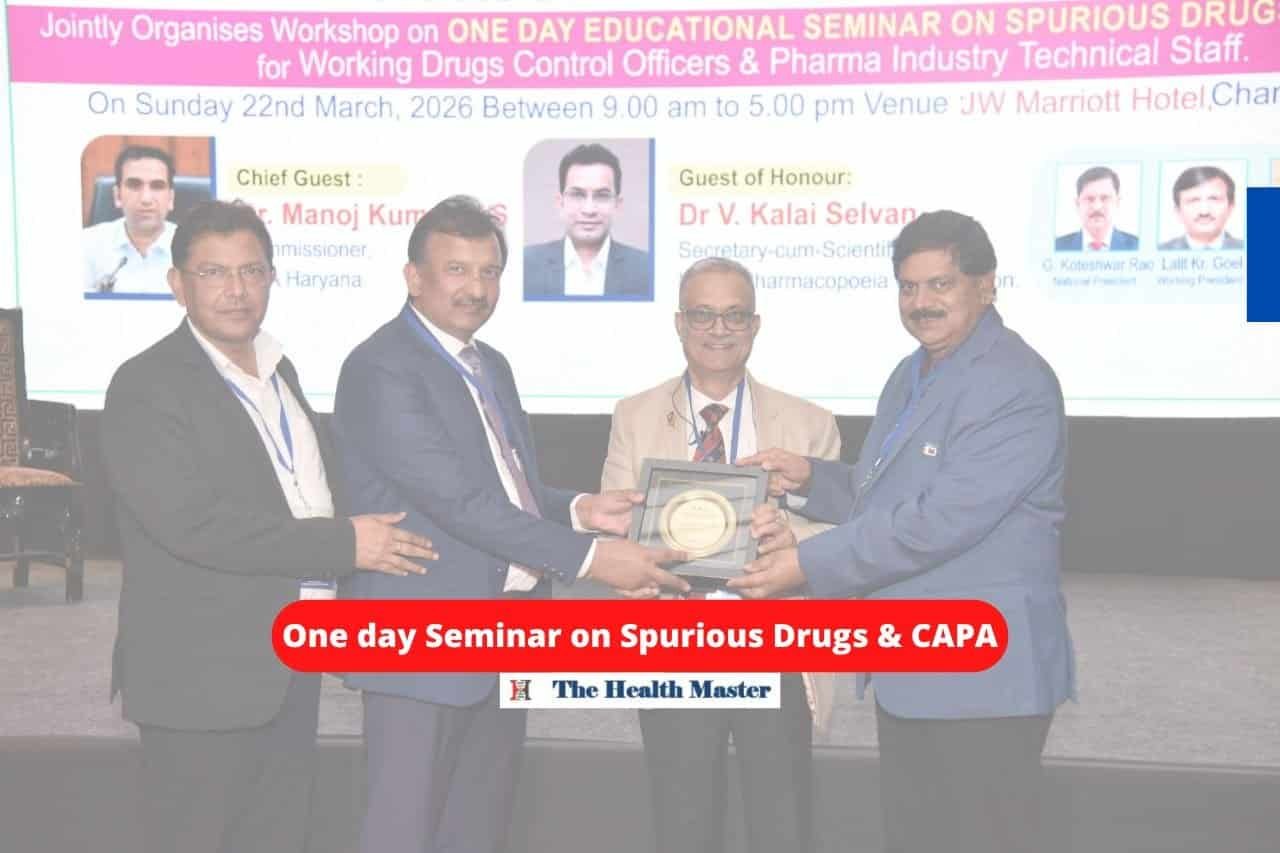
Chandigarh was the host city for a significant training program for Working Drugs Control Officers from the various states in the northern region of India.
The training was held on March 22, 2026, and featured talks from regulatory and law enforcement officials from various states, including Haryana, Punjab, Himachal Pradesh, Delhi, Jammu & Kashmir, and Chandigarh.
The Drugs Control Officers Welfare Association of India (DCOIWA) hosted the event in collaboration with the Government of Haryana.
Investigating the World of Counterfeit Medicines
During the conference, a major concern was the increasing production and sale of counterfeit medicines in the country.
The session on investigating counterfeit medicines was led by Keshav Kumar from the Indian Police Service (IPS). He is currently an officer in the Mumbai police force.
Kumar discussed the various ways to investigate counterfeit medicines and some of the challenges involved in such investigations.
Some of the challenges include identifying high-quality counterfeit medicines, investigating the supply chain of counterfeit medicines, and enacting enforcement measures against these counterfeits.
CAPA Ecosystem and Its Importance in the Pharmaceutical Sector
- Sridhar spoke about the importance of the CAPA (Corrective and Preventive Action) ecosystem in the pharmaceutical industry.
He explained that identifying an issue in a pharmaceutical plant is half the challenge.
CAPA ensures that the manufacturing plants implement measures to ensure the same issue does not recur. Such action is crucial to maintaining India’s reputation for manufacturing high-quality drugs.
Also read: NSQ Drug: Route cause analysis and CAPA
What’s New in the Indian Pharmacopoeia 2026?
Dr. Pavan Saini, a scientific officer with the Indian Pharmacopoeia Commission (IPC), spoke about the new changes in the Indian Pharmacopoeia 2026.
The Indian Pharmacopoeia is a document that lays out the quality standards that all drugs must meet in order to be sold in the country.
The 2026 edition highlights new testing protocols for generic drug manufacturing. There are also changes to the quality standards for drugs, specifically regarding the required data on their safety profiles and the limits of impurities in them.
Also read: Latest on Indian Pharmacopoeia Commission (IPC)
Also read: Latest IPC Alerts – Indian Pharmacopoeia Commission
Also read: Latest Circulars: (IPC) Indian Pharmacopoeia Commission
A Unified Front for Public Health
The leaders of the Drugs Control Officers Welfare Association of India (DCOIWA) praised the speakers at the conference.
The association leaders, including the National President G. Koteshwar Rao, the National Working President Lalit Kumar Goel, and the Organising Secretary Rakesh Dahiya, all thanked the speakers and stated their appreciation for the information presented.
They also made a statement about the importance of such conferences. As they said, these conferences are essential to improve the regulatory framework of the country.
By providing information to the officers of the Drugs Control Office (DCO), the DCOIWA ensures that the medicines on the market are safe for the consumers of the country.
Key Takeaways from the Experts:
- Combating Counterfeits: Keshav Kumar (IPS, Mumbai) delivered a masterclass on the “Investigation of Counterfeit Medicines,” sharing real-time strategies to dismantle the networks of spurious drug manufacturers.
- Quality Excellence: Sridhar broke down the CAPA (Corrective and Preventive Action) Ecosystem, emphasizing that true compliance is built on preventing errors before they happen.
- The New Gold Standard: Pavan Saini (Indian Pharmacopoeia Commission) unveiled the salient features of the Indian Pharmacopoeia 2026, setting a new benchmark for drug safety and efficacy.
FAQs
Q. What is the role of a Drug Control Officer in India?
Drug control officers are responsible for ensuring that pharmaceutical manufacturing plants comply with the Drugs and Cosmetics Act of the country. This includes inspecting manufacturing plants, checking the quality of drugs, and ensuring that pharmacies comply with quality standards.
Q. Why is the CAPA ecosystem important in the pharma industry?
A. CAPA initiatives ensure that the manufacturing of pharmaceutical drugs does not merely resolve an issue but investigates the causes of that issue to ensure that it does not occur again in the future.
Q. How does the Indian Pharmacopoeia (IP) affect the consumer?
A. The Indian Pharmacopoeia determines the quality standards that all drugs must meet before they can be sold in India. If a drug fails to pass the quality tests required by the IP, it will be illegal to sell that product in the country. This benefits the consumers because it ensures they receive only the best drugs in the market.
Disclaimer: This article contains information obtained from the source mentioned below. Our team made changes in the format to rewrite and present the news or article in a unique format.